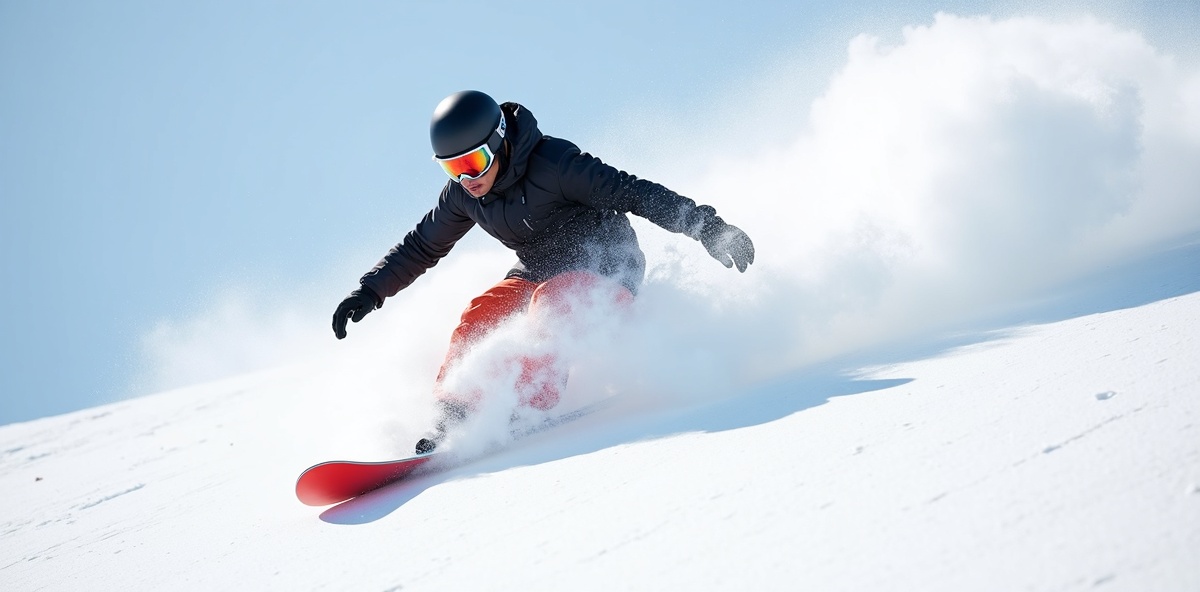
Powder Riding Mastery: Float Like a Pro in Deep Snow
Unlock the secrets of powder riding with proper stance, weight distribution, and board selection. Transform your deep snow experience.
The first time you ride real powder — thigh-deep, face-shot, laugh-out-loud deep — changes something permanently. Everything before it was just sliding. This was floating. But getting to that floating feeling requires understanding why powder riding feels different and adjusting your technique accordingly.
Why Powder Feels Different
On packed snow, your board rides on top of the surface. In powder, your board rides through the snow — it's submerged. This fundamentally changes how the board responds: edge engagement is softer, turn initiation requires more effort, and speed control works differently because you're moving through a medium, not on top of it.
The Weight Distribution Shift
The most important adjustment for powder: move your weight back — but not too far back. On packed snow, 50/50 weight is ideal. In powder, shift to roughly 60% back foot. This lifts the nose of the board above the snow surface and allows it to plane, creating the float effect. But if you go too far back (80%+), you will be fighting against the board and will tire quickly.
If you are sinking and struggling in powder, the answer is almost never 'lean back more.' It is usually 'move your bindings back 2-3cm' or 'ride a longer/wider board.' Physical back-weighting is exhausting over a full day. Use your equipment to do the work instead.
Turning in Powder
Powder turns feel like slow-motion compared to groomed runs. The snow resists the edge change, so you need to be more patient and use a more subtle, rhythmic movement. Think of surfing — long, flowing turns with the entire body moving together, rather than sharp, aggressive edge-to-edge transitions.
- Use longer turns — short quick turns in deep powder cause the nose to dive
- Initiate turns with the front knee rather than the upper body
- Maintain a rhythm — don't stop between turns, keep moving continuously
- Breathe and relax — tension in the legs makes powder riding harder
- Look ahead and commit — hesitation in powder leads to nose dives and face plants
Board Choice for Powder
- Directional shape with set-back stance: natural nose float
- Rocker in the nose: lifts in powder automatically
- Wider waist width: more surface area for float
- Longer than normal: extra surface area to distribute weight
- Tapered tail: allows easier pivot and surfy feeling in deep snow
"Powder riding is not about technique as much as it is about surrender. Stop fighting the snow and start dancing with it." — Sarah Mitchell
Sarah Mitchell
Sarah Mitchell is a CASI Level 3 instructor and former halfpipe competitor. She runs a progression camp at Mammoth Mountain and specializes in teaching park riders how to unlock their first technical tricks.